
In today’s fast-paced world of e-commerce, supply chain management, and logistics, warehouses and fulfillment centers are at the heart of delivering quality products on time, every time. The challenge businesses face isn’t just about storing goods but about storing, picking, packing, and shipping them as efficiently as possible. As customers demand quicker delivery times, better quality, and lower costs, traditional manual processes are no longer enough to keep up. This is where a well-coordinated warehouse and fulfillment system powered by automation comes into play.
Optimally, at the core of these systems lies a Warehouse Execution System (WES), software that ties together various automation technologies to create a streamlined, efficient, and cost-effective operation.
What is a Warehouse Execution System (WES)?
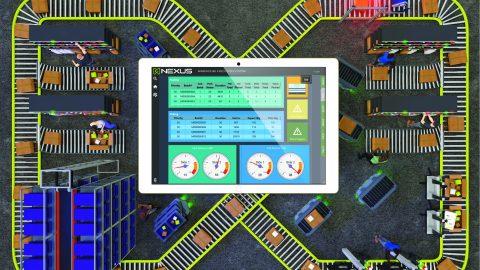
A WES is an advanced software that orchestrates the movement of goods within a warehouse by seamlessly integrating various automated processes. Unlike traditional Warehouse Management Systems (WMS) that primarily focus on inventory management, WES software goes further, coordinating tasks like order picking, sorting, packaging, and shipping in real-time. It provides a unified platform where human operators and automated systems work together, improving the overall performance of the warehouse.
The Synergy Between Automation and Warehouse Execution Software
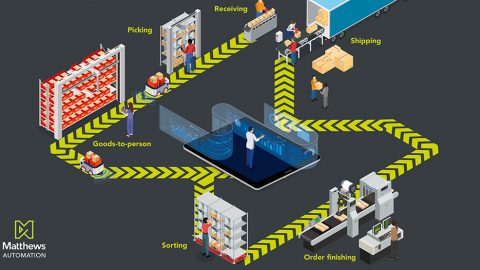
The true power of automation in the warehouse is realized when it’s all coordinated through a Warehouse Execution System. A WES acts as the brain that integrates different types of automation and human workflows, ensuring that all systems operate in harmony to achieve the best results.
By managing everything from order allocation to inventory management, a WES ensures that all automated systems—whether it’s sorting, picking, packing, or shipping—are aligned to the same goal: delivering products quickly, accurately, and at the lowest possible cost.
Additionally, a WES is scalable. As businesses grow, new automation technologies can be added without disrupting the existing system. Whether it’s introducing new robotic systems, adding more storage solutions, or upgrading packaging lines, the WES can adapt and integrate these changes with ease.
When these systems are properly coordinated using a WES, warehouses experience a surge in performance across three key areas: cost, efficiency, and quality.
1. Cost Performance
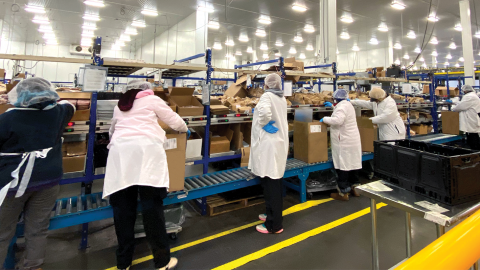
Instead of relying on a large workforce to manually handle tasks like moving and sorting goods, automation allows distribution centers to cut down on labor costs, reduce errors, and optimize resource allocation.
For example, automated conveyors and sorters, Automated Guided Vehicles (AGVs), and Autonomous Mobile Robots (AMRs) can transport goods within the warehouse, reducing the need for forklifts or human labor.
With a WES at the helm, these automated systems work in harmony, ensuring that resources are allocated where they’re needed most. As a result, warehouse operators can achieve more with fewer resources, reducing overall operational costs while still maintaining high throughput.
2. Efficiency
A WES optimizes the flow of goods through the warehouse by coordinating different automation technologies, ensuring that each part of the process works as efficiently as possible. For instance, automated storage and retrieval systems (ASRS) help store and retrieve items quickly, while solutions like robotic goods-to-person picking and pick -to-light systems increase picking speed and reduce errors.
WES enables real-time decision-making, directing automated systems to adapt to any unforeseen changes or bottlenecks in the workflow. For example, if a certain section of the warehouse is becoming congested, the WES can redirect batch picks to open bays.
This ability to optimize processes not only increases throughput but also improves the responsiveness of the entire system. In the age of e-commerce, where customers demand faster deliveries, being able to fulfill orders in the most efficient way possible can provide a significant competitive advantage.
3. Quality Control
Accuracy is crucial in fulfillment, especially when handling complex or high-value orders. Manual processes are prone to errors, which can lead to product misplacement, incorrect orders, or shipping delays.
However, today’s fulfillment centers are deploying picking systems that use lights, headsets for vocal commands, RF barcode scanners, Augmented Reality (AR), or other tools that direct human employees to the right product locations for order selection. Sensors, machine vision systems, weight scales, and barcode readers can be integrated at virtually any stage in the process to quality check orders. By inspecting orders for incorrect or damaged items before they arrive at packaging and shipping, businesses will reduce returns and improve customer satisfaction.
Throughout the day, these sub-systems continuously feed data to the WES. The software provides real-time views to managers for tracking performance, identifies areas for improvement, and drives fast, data-based decisions to enhance operations.
In an era where speed, accuracy, and cost-effectiveness are paramount, automating warehouse operations with a well-coordinated system powered by Warehouse Execution System software is essential for businesses looking to stay competitive. By leveraging multiple types of automation, businesses can optimize their warehouse performance, cut costs, increase efficiency, and maintain high-quality standards.
Investing in Warehouse Execution Software isn’t just a luxury anymore—it’s a necessity for businesses that want to meet the demands of modern logistics and fulfill customer expectations in the most effective way possible.
About the Author
DAVID SCOTT is a Vice President of Software Engineering with over 30 years of experience leading innovative software organizations in the manufacturing and supply chain industries. David is passionate about helping customers achieve streamlined operations, enhance productivity, and drive business transformation.